In an effort to understand the four horsemen in Revelation 6 we must first consider Daniel's prophesy.
Daniel 9
26…the people…shall destroy the city and the sanctuary…
27…And he shall confirm the covenant with many for one week: and in the midst of the week he shall cause the sacrifice and the oblation to cease, and for the overspreading of abominations he shall make it desolate…
The Greek word for week שָׁבוּעַ šāḇûa can mean seven years. Therefore “the midst of the week” denotes a three and a half year period that began around about when the “sacrifice and the oblation” ceased and ended when the “city and the sanctuary” were destroyed.
First century historian Josephus wrote that when Eleazer ben Ananias, governor of the temple, refused to receive sacrifices from foreigners in August 66AD “this was the true beginning of our war” (WOJ 2.17.2).
The Roman-Jewish war began in 66AD and concluded in 73AD but reached it’s climax in 70AD with the destruction of “the city (Jerusalem) and the sanctuary (the temple)”.
In Daniel 12 God told him to seal up the vision “till the time of the end” (Dan. 12:4)
When Revelation was penned the “time” of the end was “at hand” (Rev. 1:3)
In Revelation 5 we see Jesus about to loose the seals set upon Daniel’s vision (Rev. 5:2&5).
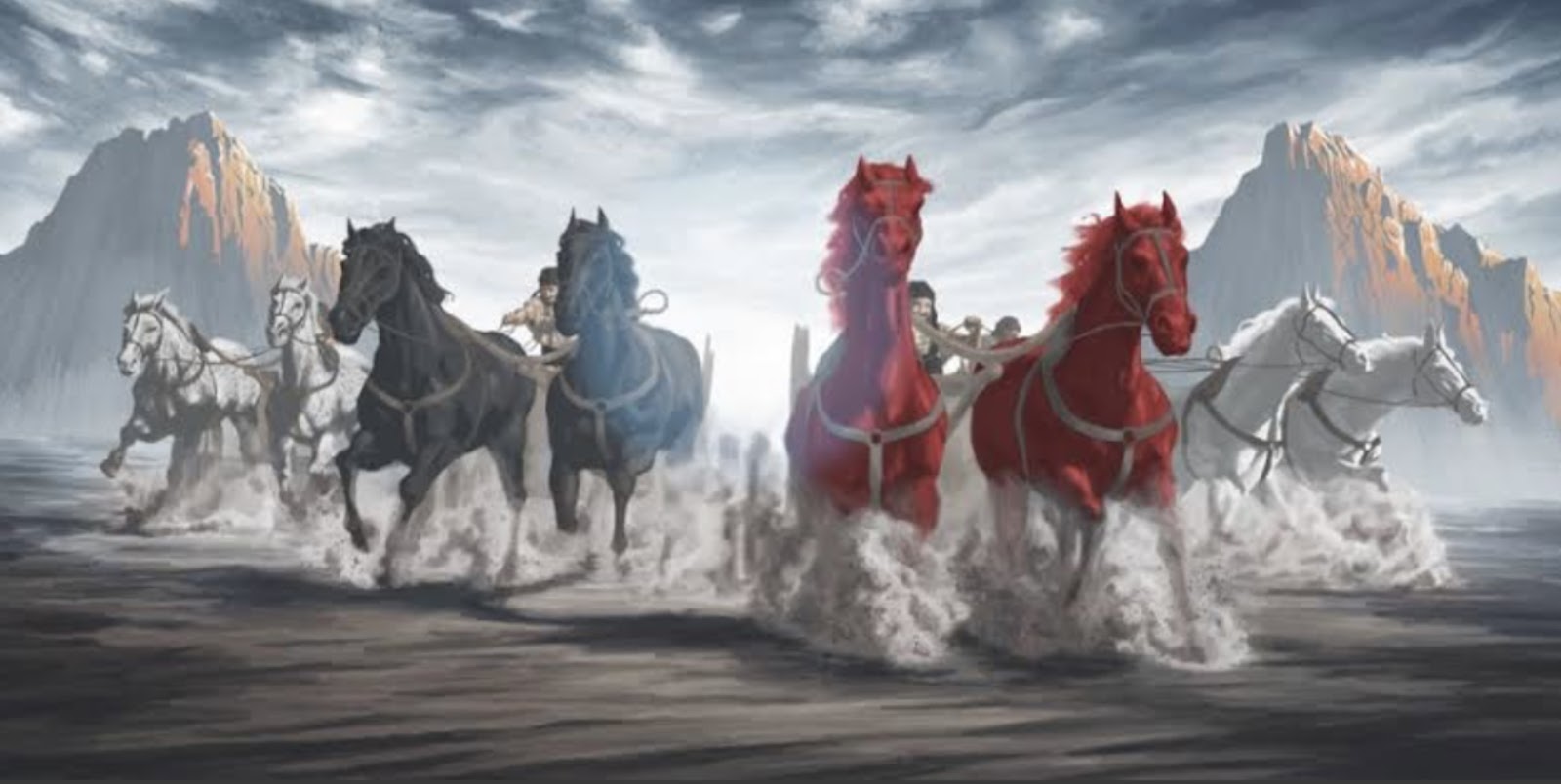
In Revelation 6 the first four seals are loosed and out bolt war horses- white, red, black and pale.
These horses must relate to things, people or events occurring within the 3 1/2 year period prophesied by Daniel.
Let’s take a close look at Revelation 6:1-8
1 And I saw when the Lamb opened one of the seals…
2…behold a white horse: and he that sat on him had a bow; and a crown was given unto him: and he went forth conquering, and to conquer.
3 And when he had opened the second seal…
4…there went out another horse that was red: and power was given to him that sat thereon to take peace from the earth, and that they should kill one another: and there was given unto him a great sword.
5 And when he had opened the third seal…I beheld, and lo a black horse; and he that sat on him had a pair of balances in his hand.
6 And I heard a voice in the midst of the four beasts say, A measure of wheat for a penny, and three measures of barley for a penny; and see thou hurt not the oil and the wine.
7 And when he had opened the fourth seal…
8…behold a pale horse: and his name that sat on him was Death, and Hell followed with him. And power was given unto them over the fourth part of the earth, to kill with sword, and with hunger, and with death, and with the beasts of the earth.
There is only one other place in the bible where a white, red, black and bay horse are specifically mentioned and that’s in Zechariah.
Zechariah 6
1 And I turned, and lifted up mine eyes, and looked, and, behold, there came four chariots…
2 In the first chariot were red horses; and in the second chariot black horses;
3 And in the third chariot white horses; and in the fourth chariot grizzled and bay horses.
4 Then I answered and said unto the angel that talked with me, What are these, my lord?
5 And the angel answered and said unto me, These are the four spirits of the heavens, which go forth from standing before the Lord of all the earth.
So, according to Zechariah’s vision the horses in Revelation 6 represent spirits.
What I gather from this, is that they’ve been sent out by God to execute his will.
I know that some teach that the rider of the white horse is Jesus Christ because the description in Revelation 6 sounds similar to Revelation 19 in which we see Jesus riding a white horse.
However, how could Jesus be one of four spirits sent out by God? Does that really make sense?
Furthermore Revelation 6 and 19 do not perfectly match, here are some differences between them:
Rev. 6
2 And I saw, and behold a white horse: and he that sat on him had a bow; and a crown was given unto him…
Rev. 19
12…on his head were many crowns
15 And out of his mouth goeth a sharp sword…
So what or who is the rider of the white horse?
My initial thought was to consider wether the four horses aligned with the “beginning of sorrows” in Matthew 24.
We know there’s a clear connection between the Olivet Discourse and the book of Revelation.
We know from the first few verses of Matthew 24 that Jesus was describing the Roman-Jewish war in which the temple was “thrown down” (Matthew 24:1&2).
According to Jesus “the beginning of sorrows” would include…false Christs, wars and rumours of wars, famine, pestilence and earthquakes (Matthew 24:5-8).
That sounds like the four horses doesn’t it?
However that would mean the white horse represents false Christs.
Were there false Christ’s around the time of the Jewish revolt? Certainly.
In around October/November of 66AD Jewish rebels defeated Cestius and his army in the valley of Beth Horon (WOJ 2.19.6-9).
Some say the battle of Beth Horon was spear-headed by a man named Simon bar Giora who, over the course of the war, emerged as a very powerful rebel leader.
His followers touted him as the Messiah who would deliver them from Roman oppression.
When captured in 70AD, Simon was dressed in a white frock and purple robe (WOJ 7.2.1)
But does this theory align with Zechariah’s vision?
Were false Christs sent out by God?
If the white horse represents someone like Simon bar Giora at the battle of Beth Horon, where do the other three horses fit in?
This was not siting well with me. I was not convinced.
So I had to reconsider WHEN, in the context of the Roman-Jewish war, were the first four seals really opened?
When did Daniel’s 31/2 years really begin?
In my first video on Revelation 5 I said it began around August 66AD when Eleazar ben Ananias refused to receive sacrifices from foreigners.
However I am now considering that the events of 66AD merely set the stage for what was to come.
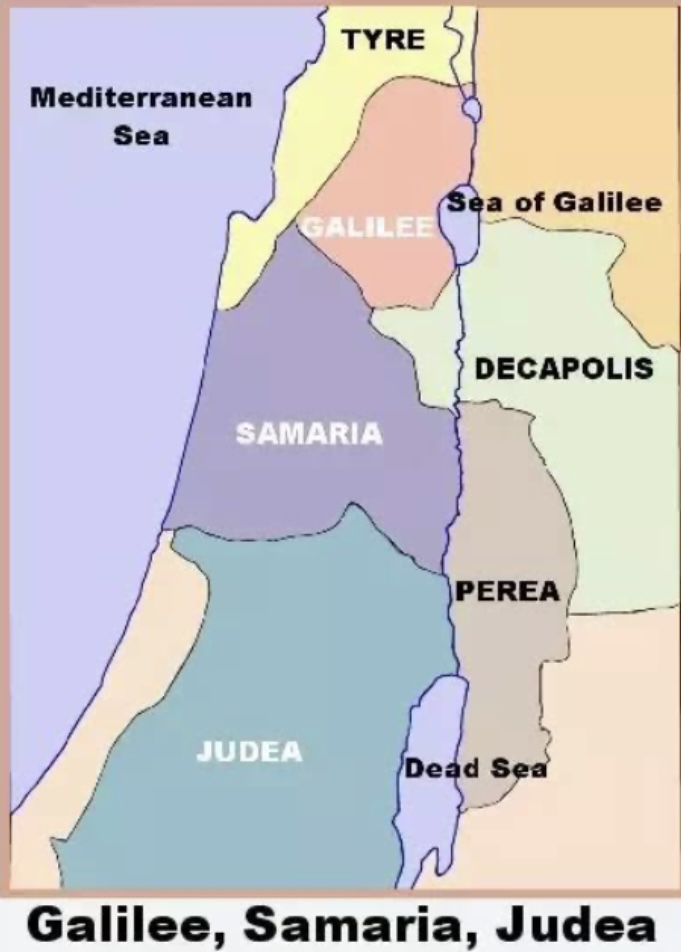
In April 67AD Vespasian, the Roman Governor of Judea, began a brutal military campaign in Galilee. Vespasian systematically cleansed the coastline as he continued down to Samaria.
Eventually his son Titus took over and destroyed Jerusalem.Were the Romans sent by God? I think they were.
God used them as a tool to execute judgement upon unfaithful Judea and Jerusalem.
As we saw in Matthew 23, the pharisees beat, stoned and slew God’s servants, they even crucified his son. therefore the blood of all the prophets, all the way back to righteous Abel would come upon THAT generation. (Matthew 23:29-36)
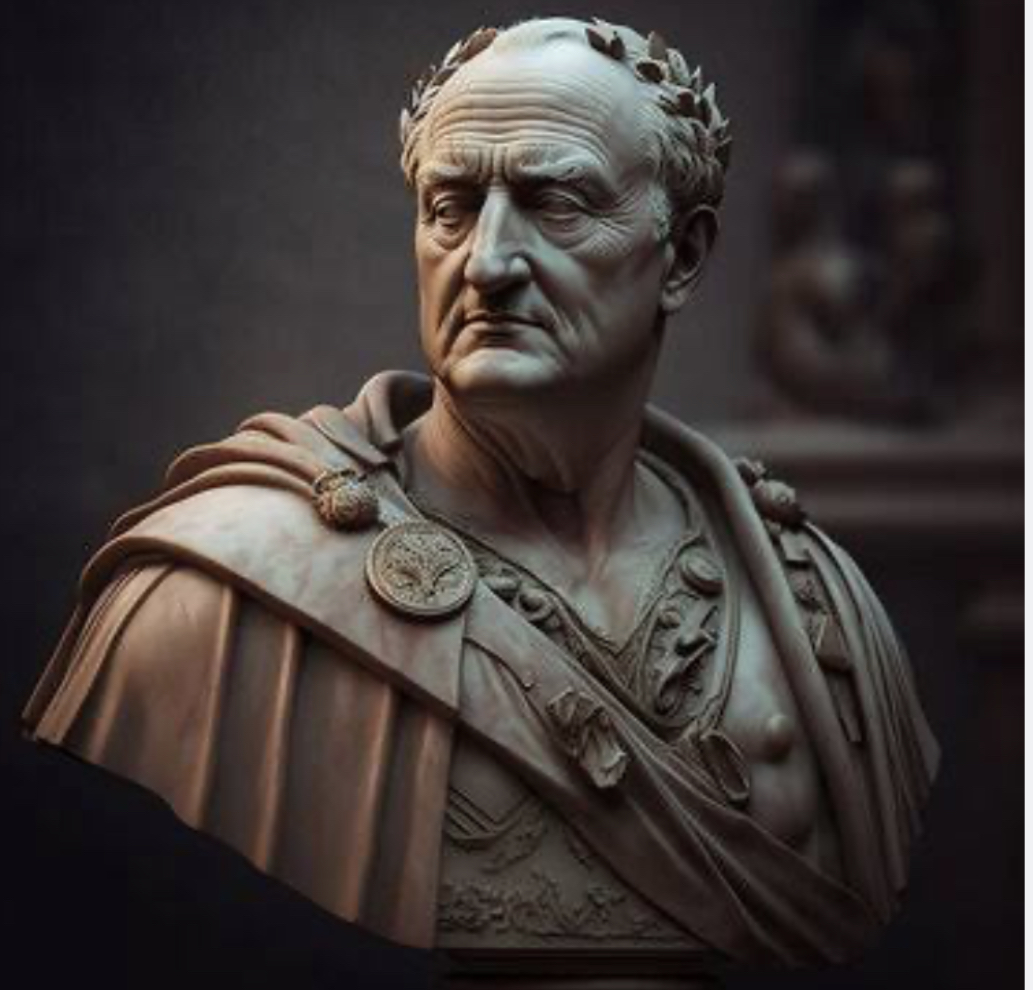
I think the white horse therefore represents Vespasian who went forth conquering and to conquer.
Revelation 6
2 And I saw, and behold a white horse: and he that sat on him had a bow; and a crown was given unto him: and he went forth conquering, and to conquer.
In Ancient Rome white horses were sometimes used in triumphal processions, where victorious Roman generals and emperors would parade through the city to celebrate their military victories. The white horse symbolized the triumph and success of the leader.
Similarly a bow can symbolize warfare, conquest, or power. The use of a bow in battle requires skill and training, in this context, it can symbolize the abilities of a warrior (Gen. 49:24).
I can see how the other three horses could flow on from Vespasian’s systematic military campaign that extended from Galilee down towards Jerusalem.
The red horse represents the thousands of people who were slaughtered, the black horse starvation as a result of warfare, the pale horse the pestilence that usually follows famine.
I want to briefly look at the curses in Deuteronomy 28 and Leviticus 26.
Deut. 28
15…if thou wilt not hearken unto the voice of the LORD thy God, to observe to do -- all his commandments…
25 The LORD shall cause thee to be smitten before thine enemies…
26 And thy carcass shall be meat unto all fowls of the air, and unto the beasts of the earth, and no man shall frighten them away.
33 The fruit of thy land, and all thy labors, shall a nation which thou knowest not eat up; and thou shalt be only oppressed and crushed always:
Leviticus 26
14 But if ye will not hearken unto me, and will not do -- all these commandments;
17…I will set my face against you, and ye shall be slain before your enemies…
18…I will punish -- you seven times more for your sins.
25…I will send the pestilence among you; and ye shall be delivered into the hand of the enemy.
Way back in the Torah Israel were warned that if they did not keep God’s commandments they would be handed over to their enemies, their land would be destroyed. Famine and pestilence would result.
My conclusion therefore it that the four war horses, or first four seals in Revelation 6 represent God’s judgement being executed upon Judea and surrounding areas via the Romans or more specifically Vespasian in 67AD.
If Daniel’s 3 1/2 years began in April 67AD as I’ve proposed, that would take us all the way through to the end of the Roman Siege in which “the city and the sanctuary” were destroyed.
Please share your thoughts in the comment section.
God bless as you study to show yourself approved.